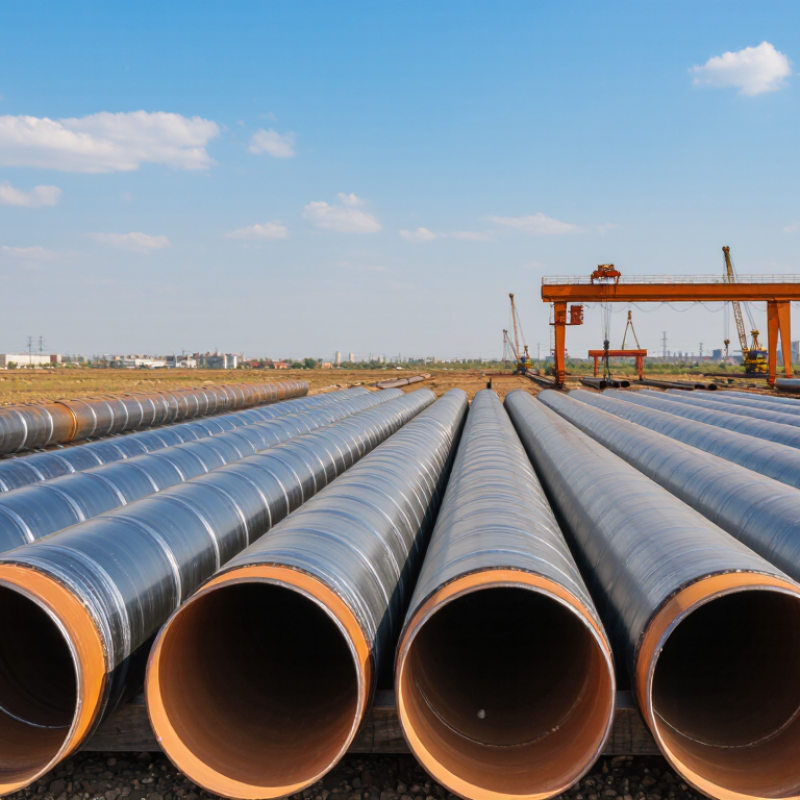
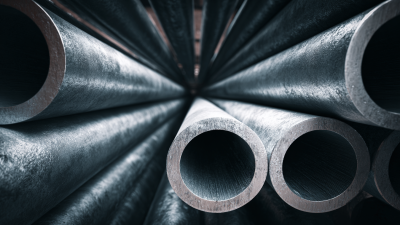
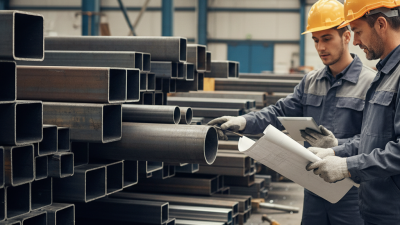
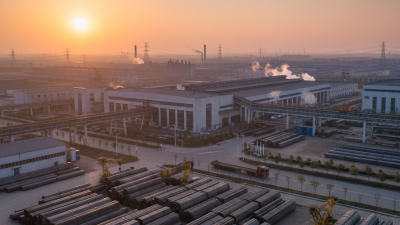
Pipeline Steel is the engineered backbone of modern energy and water infrastructure. It carries crude oil, natural gas, hydrogen blends, and treated water across deserts, fields, and urban corridors. The World Steel Association reported approximately 1.89 billion tonnes of crude steel production in 2023. Yet pipeline performance depends on more than steel volume. Chemistry, wall thickness, toughness, weld quality, coating, and operating pressure determine whether a pipe remains dependable.
Industry standards provide the technical framework. API Specification 5L and ISO 3183 classify line pipe through grades such as L245, L360, X52, and X70. Higher-strength grades can reduce wall thickness and transport weight. They may also demand stricter welding controls and fracture prevention. There is no universally “best” grade. Soil conditions, temperature, pressure, fluid composition, and construction methods must guide the choice.
The issue is becoming more urgent. The International Energy Agency’s Global Methane Tracker 2024 estimated that fossil fuel operations released about 120 million tonnes of methane in 2023. Reliable pipelines can help reduce leakage, but steel alone cannot solve every integrity problem. Corrosion, poor inspection, unstable ground, and imperfect maintenance still create risks. This guide examines carbon steel, high-strength low-alloy steel, stainless steel, and other practical pipeline categories. It also considers their trade-offs under real operating conditions. Some classifications overlap. That is worth remembering. Standards, project specifications, and local regulations should always be checked before material selection or design approval.
Pipeline steel is engineered for transporting oil, gas, water, and other fluids under pressure. It is not simply ordinary structural steel. Its chemistry, strength, toughness, and weldability must work together across long distances and changing temperatures. ISO 3183 classifies line pipe requirements by product specification levels, dimensions, testing, and service conditions. Common grades such as X52 and X65 indicate minimum yield strength in thousands of pounds per square inch. Higher strength can reduce wall thickness. However, strength alone is not enough.
Core characteristics include controlled carbon content, resistance to brittle fracture, and reliable weld performance. Charpy impact testing helps assess toughness at low temperatures. Hydrostatic testing checks pressure integrity before service. The World Steel Association’s October 2024 Short Range Outlook estimated global steel demand at about 1.75 billion tonnes for 2024. That scale matters because consistent quality remains difficult across large supply chains. A field engineer still examines weld heat-affected zones, coating damage, soil chemistry, and operating pressure. Data sheets cannot predict every failure.
Corrosion resistance also depends on the environment. Wet soil, hydrogen exposure, and dissolved salts may change material performance. Therefore, selecting pipeline steel requires more than choosing the highest grade. It requires traceable testing, qualified welding procedures, and realistic service assumptions. Some specifications look precise, yet actual conditions remain imperfect.
| Data Dimension | Pipeline Steel Type or Characteristic | Definition or Typical Data | Typical Application or Benefit |
|---|---|---|---|
| Definition | Pipeline steel | A group of carbon, low-alloy, or alloy steels manufactured for pipes that transport fluids or gases under pressure. | Used in oil, gas, water, slurry, and industrial fluid transmission systems. |
| Primary classification | Line pipe steel | Steel produced to line-pipe specifications such as API 5L or equivalent national and international standards. | Suitable for long-distance pipelines and gathering systems. |
| Strength grade | Common grades: X42, X52, X60, X65, X70, and X80 | The number generally indicates the specified minimum yield strength in ksi. For example, X65 corresponds to approximately 65 ksi or 448 MPa minimum yield strength. | Higher grades can support greater operating pressure or reduce required wall thickness, subject to design and welding requirements. |
| Carbon steel | Carbon pipeline steel | Steel whose properties are primarily controlled by carbon, manganese, and microalloying additions, with relatively limited alloy content. | Cost-effective choice for many onshore oil, gas, water, and low-to-moderate temperature services. |
| Low-alloy steel | Microalloyed pipeline steel | Steel containing small additions of elements such as niobium, vanadium, or titanium to refine grain structure and improve strength. | Provides a useful combination of strength, toughness, weldability, and reduced wall thickness. |
| Corrosion-resistant steel | Stainless or corrosion-resistant alloy steel | Steel alloyed with sufficient chromium, nickel, molybdenum, or other elements to improve resistance to specific corrosive environments. | Used for sour, saline, high-temperature, or chemically aggressive service when carbon steel protection is insufficient. |
| Pipe manufacturing method | Seamless pipe | Produced from a solid steel billet that is pierced and formed without a longitudinal weld seam. | Often selected for high-pressure, high-temperature, or smaller-diameter applications where a seamless structure is advantageous. |
| Pipe manufacturing method | Longitudinally welded pipe | Manufactured by forming a steel plate or strip and joining the edges along the pipe length. | Common for a wide range of diameters and wall thicknesses; production efficiency is generally high. |
| Pipe manufacturing method | Spiral-welded pipe | Produced by forming steel strip helically and welding the spiral seam. | Efficient for large diameters and applications such as water transmission, piling, and lower-pressure pipelines. |
| Welding process | Electric resistance welded pipe | The edges of formed strip are joined by heat generated from electrical resistance and applied pressure. | Used for many small- and medium-diameter line-pipe products. |
| Welding process | Submerged arc welded pipe | A fusion-welding process in which the arc is shielded by a granular flux; it may be applied longitudinally or spirally. | Suitable for large-diameter, heavy-wall pipe requiring controlled weld quality and high deposition efficiency. |
| Mechanical property | Yield strength | The stress at which permanent deformation begins. Typical line-pipe grades range from about 290 MPa for X42 to about 552 MPa for X80 minimum specified yield strength. | Determines pressure capacity, wall-thickness design, and resistance to plastic deformation. |
| Mechanical property | Tensile strength | The maximum stress a pipe material can withstand while being stretched before fracture; the specified value depends on the grade and standard. | Indicates resistance to rupture and supports structural integrity assessments. |
| Toughness | Fracture and impact toughness | The ability to absorb energy and resist crack initiation or propagation, often evaluated using Charpy V-notch impact testing. | Important for low-temperature service, offshore pipelines, seismic areas, and resistance to running fractures. |
| Weldability | Carbon-equivalent-controlled steel | Weldability is commonly assessed using carbon-equivalent formulas, which relate carbon and alloying elements to hardenability and cracking risk. | Lower carbon equivalent generally simplifies welding and reduces the risk of hydrogen-assisted cracking, when proper procedures are used. |
| Corrosion service | Sour-service pipeline steel | Steel qualified for environments containing hydrogen sulfide, where sulfide stress cracking and hydrogen-induced cracking can occur. | Used when transported fluids or formation conditions create a risk of wet hydrogen sulfide corrosion. |
| Service temperature | Low-temperature pipeline steel | Steel designed and tested to maintain adequate toughness at specified sub-ambient temperatures. | Used in cold climates, refrigerated gas systems, and applications vulnerable to brittle fracture. |
| Product form | Hot-rolled pipeline steel | Steel plate or strip processed at elevated temperatures to obtain the required thickness, shape, and mechanical properties. | Widely used for welded line pipe because it offers efficient forming and controlled production. |
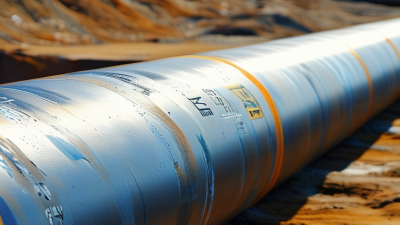
| Protection method | Coated pipeline steel | Steel pipe protected with external or internal coatings such as fusion-bonded epoxy, three-layer polyethylene, or cement mortar, depending on service conditions. | Reduces external soil corrosion, seawater attack, internal corrosion, and handling damage when correctly specified. |
| Key selection factors | Design and operating requirements | Relevant factors include fluid composition, pressure, temperature, pipe diameter, wall thickness, corrosion allowance, weldability, toughness, and applicable standards. | Proper selection balances safety, service life, constructability, maintenance needs, and total lifecycle cost. |

Pipeline steel is engineered for long, pressurized service. Its manufacture begins with carefully refined molten steel. Producers control carbon, manganese, and microalloying elements such as niobium or vanadium. These ingredients affect strength, toughness, and weldability.
The molten steel is cast into slabs. The slabs are reheated and passed through rolling mills. Controlled rolling refines the grain structure. Accelerated cooling can further improve toughness. Large plates may be formed into cylindrical sections and welded along a longitudinal or spiral seam. Seamless pipe follows a different route. A heated billet is pierced and stretched over a mandrel. Manufacturing records should track temperature, reduction, chemical composition, and cooling conditions. Small process variations matter.
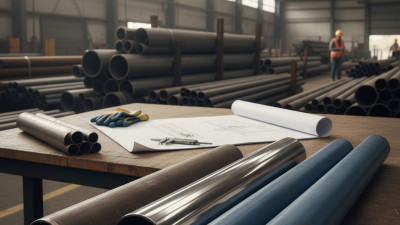
Classification usually considers manufacturing method, strength grade, dimensions, and service environment. Welded and seamless pipes have different inspection needs. Strength grades indicate minimum yield and tensile values, but a higher grade is not automatically safer. Toughness at low temperature, fracture resistance, and weld performance may control the design. Pipeline steel intended for corrosive or sour environments requires stricter chemistry and testing. Ultrasonic inspection, radiographic examination, tensile tests, impact tests, and hydrostatic testing help reveal hidden weaknesses. The exact test plan depends on the governing specification and operating conditions. Classification tables can simplify reality. Experienced engineers still review the full material certificate, weld procedure, and inspection data.
Pipeline steel is a controlled carbon or low-alloy steel made for transporting oil, gas, water, and other fluids. It must resist pressure, corrosion, cracking, and sudden temperature changes. Common grades include Grade B and X42 through X80. The number generally indicates minimum yield strength in ksi. Higher strength can reduce wall thickness. It does not always mean better performance.
Lower grades suit shorter lines, moderate pressure, and simpler service conditions. X52 and X60 are widely considered practical choices for transmission pipelines. X65 and X70 support higher pressure and longer-distance transport. X80 may reduce steel volume, but welding control becomes more demanding. A small fabrication mistake can weaken the whole joint.
Application also changes the specification. Sour-service pipelines need improved resistance to hydrogen-induced cracking. Offshore lines require strong toughness, reliable welds, and protection against seawater corrosion. Arctic projects often use steel with tested impact performance at low temperatures. Line pipe for water service may focus more on corrosion allowance and coating compatibility. Engineers review chemistry, wall thickness, weldability, inspection records, and operating pressure together. A higher grade can look efficient on paper, yet create extra welding risk. This trade-off is easy to underestimate. No grade fits every route.
Pipeline steel carries oil, gas, water, and other fluids under pressure. Common types include seamless steel, electric-resistance-welded steel, and submerged-arc-welded steel. Carbon-manganese grades provide strength and practical weldability. Low-alloy grades can offer better toughness in colder environments. The manufacturing route matters as much as the grade.
Safe pipeline performance begins with controlled strength. The pipe must resist internal pressure without excessive deformation. Toughness is equally important because a small crack can grow during impact or rapid cooling. API Specification 5L and ISO 3183 address chemistry, testing, dimensions, and mechanical performance. Field inspectors also examine weld quality, ovality, wall thickness, and coating damage. A strong pipe with a poor weld is not a strong system.
Corrosion resistance deserves constant attention. The NACE IMPACT study estimated global corrosion costs at about 2.5 trillion dollars in 2013, equal to 3.4% of global GDP. That figure remains a serious warning for pipeline operators. PHMSA’s 2023 pipeline incident reporting also shows why corrosion control, material verification, and inspection planning cannot be treated as paperwork. Cathodic protection, intelligent inspection tools, and moisture control reduce risk, but none is perfect. In practice, temperature cycling, soil chemistry, residual stress, and imperfect records can combine unexpectedly. The uncomfortable detail is simple: selecting a higher-strength grade does not automatically create a safer pipeline.
Pipeline steel is designed to move oil, gas, water, or slurry under pressure. Its main types include seamless and welded pipe, with welded pipe often selected for large diameters. Carbon-manganese steel is common because it offers strength, weldability, and reasonable cost. Higher-strength grades can reduce wall thickness, but they may demand stricter welding control. Toughness matters in cold regions and high-pressure service.
Standards help engineers compare grades. API 5L and ISO 3183 are widely used for line pipe requirements. Project specifications may also reference ASME B31.4 or B31.8 for pipeline design. Sour-service environments require additional attention to cracking resistance and material qualification. A dependable review checks chemical composition, tensile properties, impact results, weld quality, dimensions, and traceability records. Mill certificates alone should not replace inspection or testing.
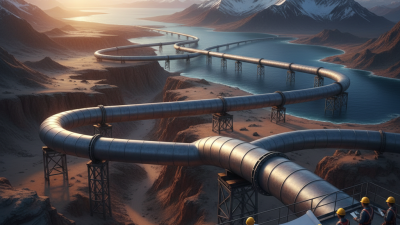
Selection begins with operating pressure, temperature, fluid composition, pipe diameter, and installation conditions. Corrosive fluids may require corrosion allowances, coatings, or internal protection. Mountain routes increase bending and handling risks. Underwater projects often need stronger impact performance and careful joint protection. Common uses include transmission lines, gathering systems, municipal water networks, and industrial process pipelines. A higher grade is not automatically better. It can increase cost and complicate welding. In practice, the safest choice balances strength, toughness, corrosion resistance, availability, and field workmanship. No selection rule is perfect. Conditions change, and assumptions deserve review.