10 Best Steel Tube Manufacturers for Global Buyers
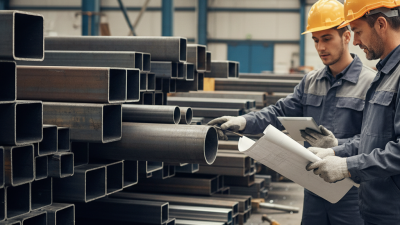
Choosing among the 10 Best Steel Tube Manufacturers for Global Buyers requires more than comparing prices. A reliable supplier must combine production experience, engineering knowledge, quality control, and dependable export service. Steel Tube products may look similar in a catalog, yet their performance can differ greatly inside a bridge column, boiler system, oil pipeline, or precision machine.
Lakshmi Mittal, a widely recognized steel industry leader, once said, “Steel is the most important material in the world.” His observation reflects the material’s continuing role in infrastructure and manufacturing. However, reputation alone is not enough. Buyers should examine whether each manufacturer produces welded, seamless, galvanized, or precision Steel Tube products. They should also check ASTM, ASME, API, EN, or other relevant certifications. Small details matter. Wall thickness. Surface finish. Heat numbers. Testing records.
This guide evaluates manufacturers through practical buyer concerns, including factory capability, dimensional consistency, raw-material control, inspection procedures, production capacity, packaging, and international delivery experience. Traceability should be clear from billet or coil to finished tube. That builds confidence.
No ranking is perfectly objective. Regional strengths, order volume, and application requirements can change the result. A construction buyer may prioritize fast delivery, while an energy contractor may demand stricter testing and documentation. Some manufacturers appear impressive online but provide limited evidence during technical discussions. That is a weakness worth noticing.
The companies below are presented as potential partners, not automatic choices. Global buyers should request current certificates, sample reports, reference projects, and clear commercial terms before committing. A careful review can prevent costly replacements later. Reliability is earned in the details.
Global Steel Context: 1,888 Million Tonnes Produced in 2023
Global steel production reached 1,888 million tonnes in 2023, according to the World Steel Association’s World Steel in Figures 2024. That scale matters. Steel tubes represent only one segment of this output, yet they support construction, energy, transport, and industrial equipment across continents. For global buyers, this market size creates choice, but it also makes supplier comparisons harder.
The International Energy Agency reports that iron and steel account for about 8% of global final energy demand and roughly 7% of energy-related carbon dioxide emissions. Buyers should therefore assess more than price and capacity. Review chemical certificates, dimensional tolerances, hydrostatic test records, coating specifications, and heat-number traceability. Small errors multiply. A tube with uneven wall thickness may cause installation delays or premature failure. Independent inspection can expose problems before shipment.
A practical ranking of steel tube manufacturers should also examine export experience, production consistency, packaging, and response quality. The comparison is imperfect. Public capacity figures may not reflect current utilization, maintenance, or product mix. I would treat marketing claims cautiously and request recent test reports from the same product line. The OECD Steel Outlook 2023 also highlights continuing pressure on steelmakers to reduce emissions while maintaining competitiveness. That pressure affects energy choices, pricing, and long-term supply reliability. Not just price. Reliable documentation often matters more.
10 Best Steel Tube Manufacturers for Global Buyers — Global Steel Context: 1,888 Million Tonnes Produced in 2023
The chart compares crude steel production in 2023 across the leading producing economies. Production volumes are shown in million tonnes and provide market context for global steel tube sourcing.
Source: World Steel Association, 2023 crude steel production statistics. The global total was approximately 1,888 million tonnes.
Buyer Criteria: API 5L, ASTM A53/A106, EN 10219 and ISO 9001
For global buyers, the best steel tube manufacturers should be assessed against verifiable standards, not glossy rankings. World Steel Association data reports 1.89 billion tonnes of crude steel production in 2023, making supplier selection increasingly complex. A capable manufacturer should clearly state whether its tubes meet API 5L for line pipe, ASTM A53 for general-purpose piping, or ASTM A106 for high-temperature service. EN 10219 matters for cold-formed structural hollow sections.
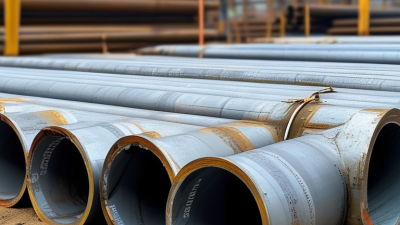
Ask for recent mill certificates. Check heat numbers, chemical composition, yield strength, tensile strength, and elongation. Hydrostatic test records should match the ordered grade and dimensions. Welded tubes need visible seam-control procedures, while seamless tubes require evidence of process inspection. Small details matter.
They often reveal weak systems.
ISO 9001 certification supports process consistency, but it does not automatically prove product quality. The ISO Survey 2022 recorded more than 1.2 million ISO 9001 certificates worldwide, so certification alone is not a strong differentiator. Buyers should verify certificate scope, issuing body, expiry date, and manufacturing location. The certificate should cover tube production, not only office administration.
For EN 10219 products, review corner radius, dimensional tolerances, and impact-test requirements where applicable. For API 5L orders, confirm PSL1 or PSL2, testing frequency, and traceability through loading. Independent inspection can reduce risk, although it adds cost and time. No shortlist is perfect. A factory visit may still expose gaps that documents hide.
The 10 Best Steel Tube Manufacturers by Capacity and Export Reach
10 Best Steel Tube Manufacturers for Global Buyers
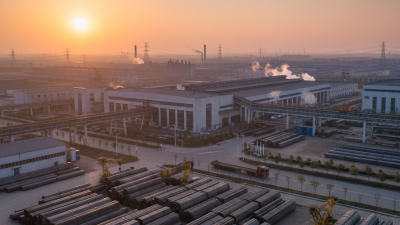
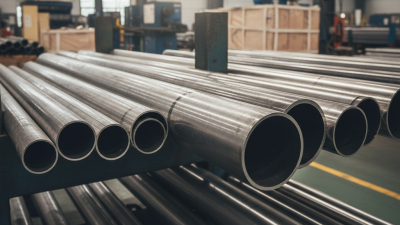
The ten best steel tube manufacturers are assessed by capacity and export reach, not reputation alone. Large mills can support recurring orders, stable specifications, and urgent replacement demand. Their facilities commonly include electric resistance welding, seamless production, galvanizing, heat treatment, and automated dimensional inspection.
Capacity matters. Yet published tonnage requires careful reading. Some figures combine multiple plants, product categories, or theoretical output. Experienced buyers should request recent production records, mill certificates, and practical monthly availability. A plant producing structural tubes may not handle precision tubes or demanding pressure-service grades.
Export reach shows operational maturity. Strong manufacturers maintain packing procedures for long sea routes, traceable batch numbers, and documentation for customs clearance. They may serve ports across Asia, Europe, the Middle East, Africa, and the Americas. However, a wide destination list does not guarantee smooth delivery. Check port experience, container loading photos, delivery terms, and claims handling. Ask for references from buyers with similar diameters and wall thicknesses. Small details decide performance. A missing coating report can delay installation for days. My own review standard would also include factory visits or independent inspections, although budgets sometimes make that difficult. That limitation should remain visible when comparing the final ten.