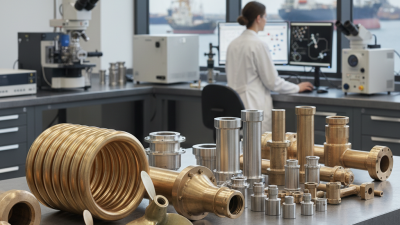
Copper Nickel is a family of copper-based alloys valued for strength, durability, and resistance to seawater corrosion. Its most recognized grades include 90/10 and 70/30, referring to their approximate nickel content. These alloys maintain useful mechanical performance in wet, salty environments. That makes them important in shipbuilding, offshore systems, desalination plants, and coastal power stations.
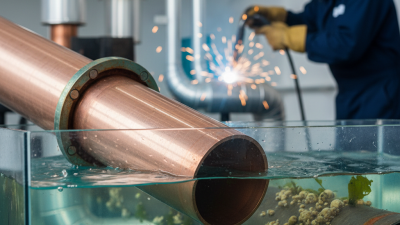
In marine engineering, Copper Nickel commonly appears in seawater piping, condenser tubes, heat exchangers, and firewater systems. Its smooth internal surface can reduce marine growth and help maintain water flow. A pipe carrying seawater may look ordinary from outside. Inside, however, its alloy composition helps resist pitting and corrosion for many years. This distinction matters. Material selection affects maintenance costs, equipment reliability, and operational safety.
Copper Nickel also serves in coinage, electrical components, and specialized industrial equipment. Engineers choose it when thermal conductivity, formability, and corrosion resistance must work together. Field inspections still matter, because no alloy is maintenance-free. Poor installation, contaminated water, excessive flow rates, or contact with unsuitable metals can cause unexpected damage. The material has limits.
Understanding its applications requires more than listing industries. It requires examining the environment, temperature, water chemistry, pressure, and expected service life. This article explains where Copper Nickel is used and why professionals select it for demanding conditions. It also considers practical disadvantages, because a balanced evaluation is more useful than a simple claim of superiority.
What Is Copper Nickel Used For?
Copper nickel is a family of copper-based alloys containing nickel, rather than a single material. Common grades include 90/10 and 70/30, describing copper and nickel percentages. Small additions of iron and manganese can improve seawater resistance. The Copper Development Association identifies these alloys as useful for seawater piping, heat exchangers, condensers, ship components, and desalination equipment. They form a thin protective surface film when exposed to clean seawater. That protection develops gradually. It is not magic.
The alloy is also used in marine fittings, offshore cooling systems, and some circulation pipes. Its copper content supports thermal conductivity, while nickel improves strength and corrosion performance. The Nickel Institute’s technical guidance highlights copper-nickel alloys for long-term seawater service, especially where biofouling control matters. However, dirty seawater, stagnant flow, or poor welding can damage performance. A specification sheet cannot replace site experience. This is where buyers sometimes underestimate risk.
Tips: Check the alloy grade, water velocity, temperature, and joining method before choosing copper nickel. The 90/10 grade often suits general marine systems, while 70/30 can provide higher strength and stronger resistance in demanding conditions. The International Copper Study Group reports global refined copper use above 25 million tonnes annually, showing copper’s industrial scale, but this figure does not represent copper-nickel demand alone. That distinction matters. Always request traceable test certificates and review applicable ASTM or EN requirements.
Copper-nickel alloys are used in seawater piping, ship condensers, desalination equipment, and offshore heat exchangers. Their value begins in the melting shop. The copper base provides conductivity and workability. Nickel improves strength and seawater resistance. Common grades include 90/10 and 70/30 copper-nickel, referring to their approximate copper-to-nickel balance.
The process is not perfectly forgiving. Producers first select clean copper, nickel, and controlled additions of iron and manganese. The charge is melted in a furnace, then sampled before casting. Iron and manganese help form protective surface films in seawater. However, excessive additions can reduce ductility or complicate welding. The Copper Development Association identifies these elements as important in marine-grade copper-nickel performance.
After casting, the solid alloy is reheated and hot-rolled into plate, strip, or tube stock. Annealing softens the metal and reduces internal stress. Cold working can then improve dimensional accuracy and strength. Each heating cycle requires temperature control. Poor control may cause uneven grain structure, surface scale, or hidden defects.
The raw-material market also affects production planning. The USGS Mineral Commodity Summaries 2024 reported about 22 million metric tons of mined copper and 3.6 million metric tons of mined nickel in 2023. Those figures show why chemistry consistency matters. Nickel is not simply a minor ingredient. It can strongly influence cost and final performance. In real workshops, the recipe looks simple on paper, but small chemistry drift still demands correction.
| Data Dimension | Alloy or Stage | Typical Composition or Conditions | Key Characteristics | Common Uses or Manufacturing Details |
|---|---|---|---|---|
| Alloy Type | 90/10 Copper-Nickel | Copper balance with approximately 10% nickel; small amounts of iron and manganese may be added. | Good resistance to seawater corrosion, biofouling, erosion, and hydrogen embrittlement. | Marine piping, seawater cooling systems, heat-exchanger tubes, condenser tubes, and desalination equipment. |
| Alloy Type | 70/30 Copper-Nickel | Copper balance with approximately 30% nickel; iron and manganese are commonly controlled for corrosion performance. | Higher strength and strong resistance to fast-flowing seawater compared with lower-nickel grades. | Shipboard seawater piping, offshore systems, condensers, heat exchangers, and demanding marine applications. |
| Alloy Type | Copper-Nickel with Iron Additions | Usually based on a copper-nickel composition with controlled iron and manganese additions. | Improved resistance to impingement attack and erosion-corrosion in flowing seawater. | Seawater pumps, piping elbows, intake systems, and components exposed to turbulent water flow. |
| Application | Marine Piping | Commonly uses 90/10 or 70/30 copper-nickel tubing, pipe, and fittings. | Forms a protective oxide layer in seawater and maintains performance in chloride-rich environments. | Used for seawater cooling, fire-fighting systems, ballast systems, and general marine service piping. |
| Application | Heat Exchangers and Condensers | Tubing is selected according to seawater velocity, temperature, pressure, and mechanical requirements. | Combines thermal conductivity with corrosion resistance and good resistance to biofouling. | Used in power-generation cooling circuits, ship cooling systems, and industrial seawater heat exchangers. |
| Application | Desalination Equipment | Often applied in evaporator, brine, and seawater-handling sections where copper-nickel compatibility is suitable. | Resists corrosion in warm, saline water and tolerates repeated exposure to seawater. | Used in seawater intake lines, evaporator components, brine circulation systems, and heat-transfer equipment. |
| Application | Coinage and Decorative Metalwork | Uses copper-rich alloys containing nickel to provide a silvery appearance and suitable wear resistance. | Good durability, recognizable color, and resistance to tarnishing under normal service conditions. | Used for selected coins, medals, architectural details, hardware, and decorative components. |
| Manufacturing Stage | Raw Material Preparation | Copper, nickel, and carefully controlled alloying additions are weighed and prepared for melting. | Accurate proportioning helps achieve the required chemistry and consistent mechanical properties. | Scrap and recycled material may be used when its composition is identified and controlled. |
| Manufacturing Stage | Melting and Alloying | Metals are melted in a suitable furnace; nickel and other additions are dissolved into the molten copper. | Temperature, melt cleanliness, and atmosphere control help limit oxidation and contamination. | The molten alloy is sampled and chemically checked before casting. |
| Manufacturing Stage | Casting | The molten alloy is cast into slabs, billets, cakes, or other semi-finished forms. | Controlled solidification reduces segregation, porosity, and other casting defects. | Continuous or ingot casting may be followed by surface conditioning and inspection. |
| Manufacturing Stage | Hot Working | Cast material is reheated and processed by hot rolling, forging, or extrusion. | Reduces cross-sectional area, refines the structure, and produces workable plate, bar, pipe, or billet. | Used to make primary shapes before further sizing and finishing operations. |
| Manufacturing Stage | Cold Working | Material is further reduced or shaped at temperatures below the hot-working range. | Improves dimensional accuracy and can increase strength through work hardening. | Used for precision tube, strip, sheet, wire, and other products requiring close tolerances. |
| Manufacturing Stage | Annealing | Material is heated to a controlled temperature and cooled under specified conditions. | Restores ductility, relieves residual stress, and prepares the alloy for additional forming. | Applied between working passes or as a final treatment, depending on the required temper. |
| Manufacturing Stage | Finishing and Inspection | Products may be straightened, pickled, polished, cut, machined, and tested. | Confirms surface quality, dimensions, chemistry, mechanical properties, and leak tightness where required. | Final products include pipe, tube, plate, sheet, bar, wire, fittings, and fabricated components. |

Copper nickel is valued for its balance of corrosion resistance, strength, and ductility. Its key advantage appears in seawater systems, where salt and oxygen quickly attack ordinary metals. A thin protective film forms on its surface, slowing further corrosion. This makes copper nickel useful for marine piping, condenser tubes, heat exchangers, and desalination equipment.
It also resists marine biofouling better than many common materials. That matters inside narrow pipes, where organisms can reduce water flow.
However, the protection is not automatic. Poor installation, stagnant water, or unsuitable joints may still cause damage. Copper nickel has lower thermal conductivity than pure copper, but it remains practical for transferring heat. It can be shaped, welded, and maintained without unusually complex procedures. Its ductility helps it absorb vibration and small movement in shipboard systems. Electrical resistance is higher than copper’s, so it is not usually selected for high-efficiency electrical conductors. Material grade, water chemistry, flow speed, and temperature all influence service life. In real projects, engineers should inspect weld areas and connection points carefully. These details are easy to overlook. Even a well-chosen alloy can perform poorly when design assumptions are too optimistic.
Copper nickel is used where seawater, heat, and corrosion create demanding conditions. Its strongest applications are marine piping, desalination plants, shipboard cooling systems, and offshore equipment. The common 90/10 alloy contains about 90% copper and 10% nickel. It forms a protective surface film in seawater. This film reduces corrosion and helps control marine growth.
Copper nickel also performs well in condensers, heat exchangers, fire-water lines, and coastal power facilities. According to the International Copper Association’s technical guidance, 90/10 copper nickel can support seawater flow velocities near 3.5 meters per second when correctly designed. The 70/30 alloy is often selected for more severe flow conditions. The U.S. Geological Survey reported approximately 23 million metric tons of mined copper production in 2024. That large supply supports broad engineering use, although alloy demand depends on project specifications, not volume alone.
Material selection still requires judgment. Poor welding, trapped sediment, or polluted seawater can damage an otherwise suitable system. In my experience, engineers sometimes focus on corrosion resistance and overlook installation quality. That is a costly gap. Desalination plants may use copper nickel in seawater intake lines, pumps, and heat-transfer sections. Shipbuilders value its reliability in compact cooling circuits. Offshore platforms use it where inspection access is limited. Yet copper nickel is not a universal solution. Local water chemistry, flow speed, temperature, and galvanic contact must be checked before approval.
Copper-nickel alloys are widely used in marine and seawater environments because they combine strong corrosion resistance, good resistance to biofouling, and reliable heat transfer. The chart shows the nominal nickel content of commonly specified alloys for representative applications: 90/10 copper-nickel contains about 10% nickel, while 70/30 copper-nickel contains about 30%.
Copper nickel alloys are widely used where seawater, pressure, and heat challenge ordinary metals. Common applications include shipboard piping, seawater condensers, desalination equipment, offshore cooling lines, and marine heat exchangers.
The International Energy Agency’s Global Critical Minerals Outlook 2024 estimates copper demand could increase from about 26 million tonnes in 2023 to 37 million tonnes by 2040 under stated policies. That wider demand strengthens interest in durable copper-based alloys, although demand forecasts can change.
The most familiar grade is 90/10 copper nickel, designated C70600. It contains roughly 90% copper and 10% nickel. This grade offers reliable seawater resistance, good weldability, and moderate cost. It suits cooling-water pipes and ship systems.
The 70/30 grade, C71500, contains more nickel and generally provides higher strength and better resistance in fast-flowing seawater. Engineers often specify it for condenser tubes, naval piping, and severe marine service. Small additions of iron and manganese improve resistance further.
Grade selection is not automatic. A common mistake is treating 90/10 as universally sufficient. Flow velocity, sand content, temperature, welding method, and biofouling control can change the decision. ASTM B466/B466M covers copper nickel seamless pipe requirements, but project specifications still need careful review.
Field inspections sometimes reveal another problem: excellent alloy chemistry cannot compensate for poor installation. Clean surfaces, correct supports, and controlled startup matter. That part is easy to underestimate.